As highlighted in past quarterly letters, the Federal Reserve’s dual mandate is to promote stable prices (low inflation) and maximum employment. Over the past two years, the Fed has been grappling with this complex challenge. By keeping policy rates elevated, their priority has been disinflationary monetary policy to carefully temper economic growth along with the equally important goal of avoiding a recession. This delicate balancing act is commonly referred as a goldilocks “soft landing” for the economy.
Recently, there’s been improvement on the inflation front but the jobs market has softened in tandem. In September, Fed Chairman Jerome Powell had the following remarks:
“We do not believe that we need to see further cooling in labor market conditions to achieve two percent inflation.”
…and further,
“Broader economic conditions also set the table for further disinflation. The labor market is now roughly in balance. Longer-run inflation expectations remain well anchored.”
Translation – the Fed is shifting their focus and policy decisions from stabilizing prices to maintaining maximum employment but still recognizes the difficult task at hand. Their decision to cut the target interest rate by 0.50% at September’s meeting to a range of 4.75%-5.00% reflects this shift.
Regarding the current state of employment, Powell outlined multiple positives, citing the following:
- The labor force participation rate of individuals aged 25 to 54 (so-called prime age) is near its historic high.
- The prime-age women’s participation rate has continued to reach new all-time highs.
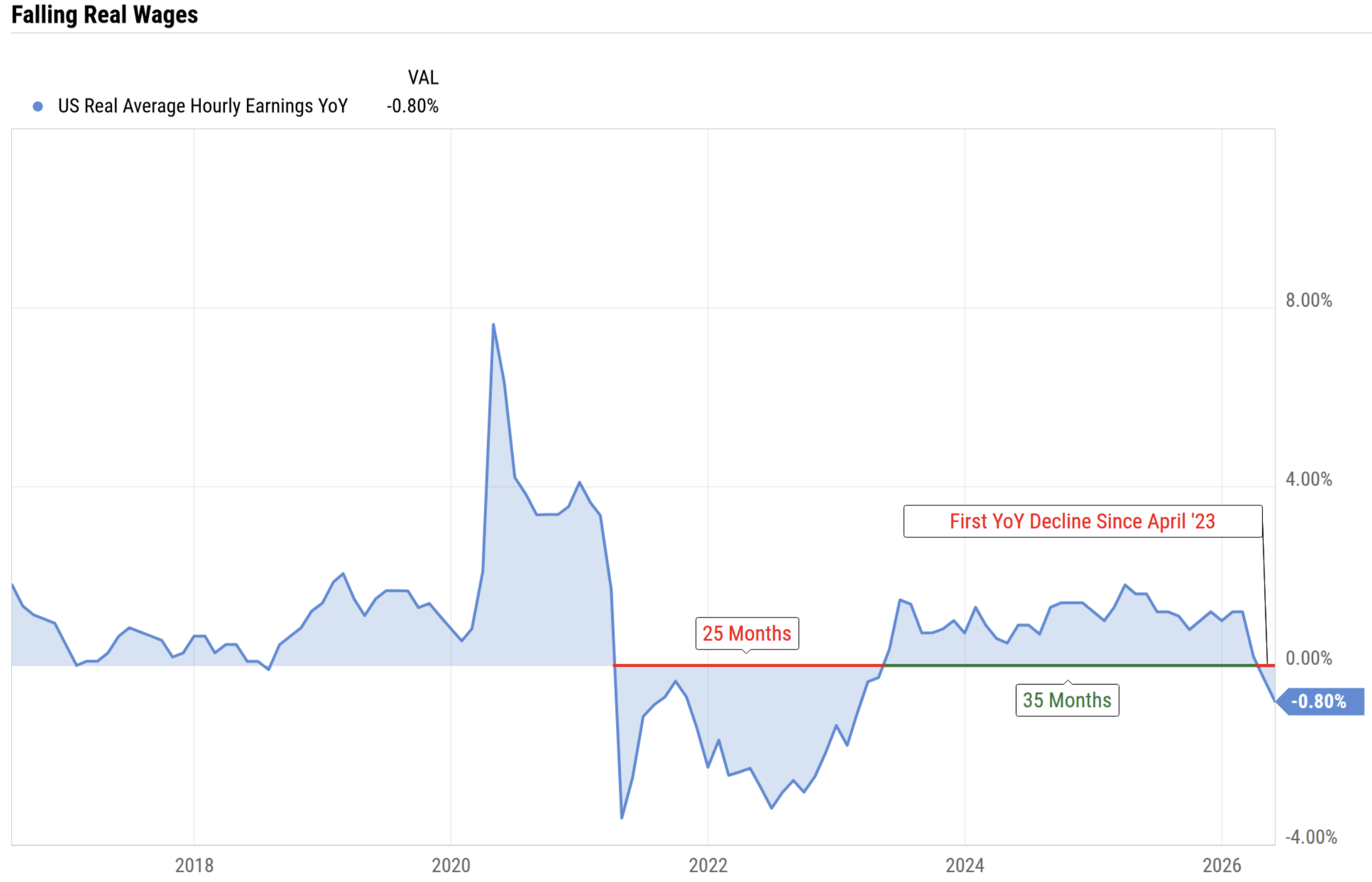
- Real wages are increasing at a solid pace, broadly in line with gains in productivity.
- The ratio of job openings to unemployed workers remains above one, indicating there are still more open positions than there are people seeking work. Prior to 2019, that was rarely the case.
In an economy where personal consumption represents nearly 70% of GDP, the labor market plays a pivotal role. Elevated borrowing costs can discourage business investment, which in turn slows hiring. Wage growth and job security fuels consumer spending, which in turn powers economic expansion.
The following chart shows the unemployment rate, with past lows circled in red and past recessions highlighted in gray. At 4.1%, although up from the 3.4% April 2023 low, the unemployment rate remains at a very healthy level.

There is concern that once the unemployment rate bottoms and begins to rise, it typically continues on an upward trajectory with an economic recession occurring shortly thereafter.
Unemployment can increase for two reasons: a decrease in employment or an increase in the number of people entering the jobs market. As shown below, recent data indicates that the rise in unemployment may be driven by an expanding labor force more so than a drop in actual employment. Initial jobless claims and layoffs remain at low levels, signaling that the labor market remains relatively stable.

Source: U.S. Bureau of Labor Services, J.P. Morgan Asset Management
In contrast with lackluster jobs data for August and July, the September payroll report surpassed the expectations of every single economist surveyed by Bloomberg. While analysts projected an increase of 142,500 jobs, payrolls actually rose by 254,000—the highest gain since March—largely driven by hospitality (bars & restaurants), followed by the education, health care, government, and construction industries. This report also marked the largest seasonal adjustment dating back to 2002, with upward revisions to hiring over the summer.
The U.S. Bureau of Labor Services (BLS) bases these reports on business survey responses, with only 62% of businesses responding in a timely manner for September. The final response rate typically reaches around 90%, and smaller businesses are usually the last to submit data. Further revisions in October…and future months…are to be expected. Although September was strong, we agree with Powell’s view that the employment landscape is roughly in balance, with some underlying issues that warrant attention.
The Fed’s decisions are based on the economic data they have in hand. Disappointing payroll reports in July and August influenced the decision to cut interest rates aggressively in September, which Powell termed a “recalibration” of policy. Projections currently indicate another 0.50% of rate cuts this year and an additional 1.50% by the end of 2026.
If recent history is any indication of the future trajectory of rates, the timing and scale of these forthcoming cuts will likely evolve. When the Fed meets next in November, they will have another BLS payroll report, Consumer Price Index (CPI) report, Personal Consumption Expenditures (PCE) report, and third quarter GDP to help guide their path forward.
The Fed will closely monitor inflation and the underlying changes to the employment landscape as they attempt to stick the ‘soft landing’… That said, the Fed (like everyone else) is still trying to understand the post-pandemic economy given the inordinate amount of COVID stimulus, shifting employment trends and the reconfiguration of supply chains. As investors, we wish them luck.
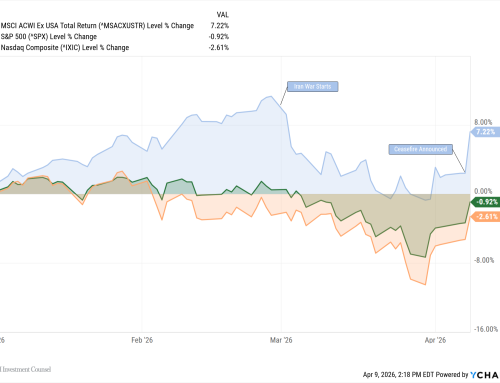
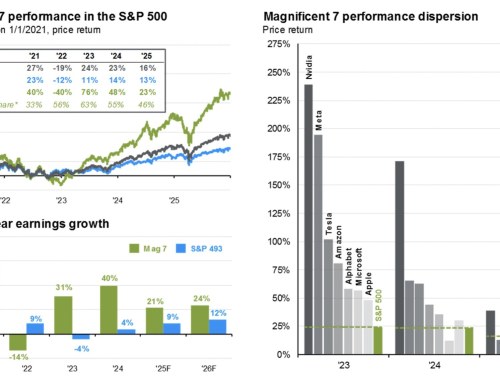
There are other known risks to capital markets beyond the labor market and inflation. The Federal deficit, geopolitical risks, prevalence of natural disasters, and current valuations all remain top of mind. But for now, with prices stabilizing, full employment, and above trend economic growth, sentiment remains optimistic. The S&P 500 posted a 5.9% gain in the third quarter, positioning it for the strongest year-to-date performance since 1997. The index is up 22.1% YTD and 36.4% over the last twelve months.
Value stocks and small-cap equities outperformed their growth and large-cap counterparts during the third quarter. Value stocks—those trading at low prices relative to fundamentals—exceeded the performance of growth stocks by 6.2%. Similarly, small-cap stocks outpaced large-cap equities, delivering a 3.4% advantage.
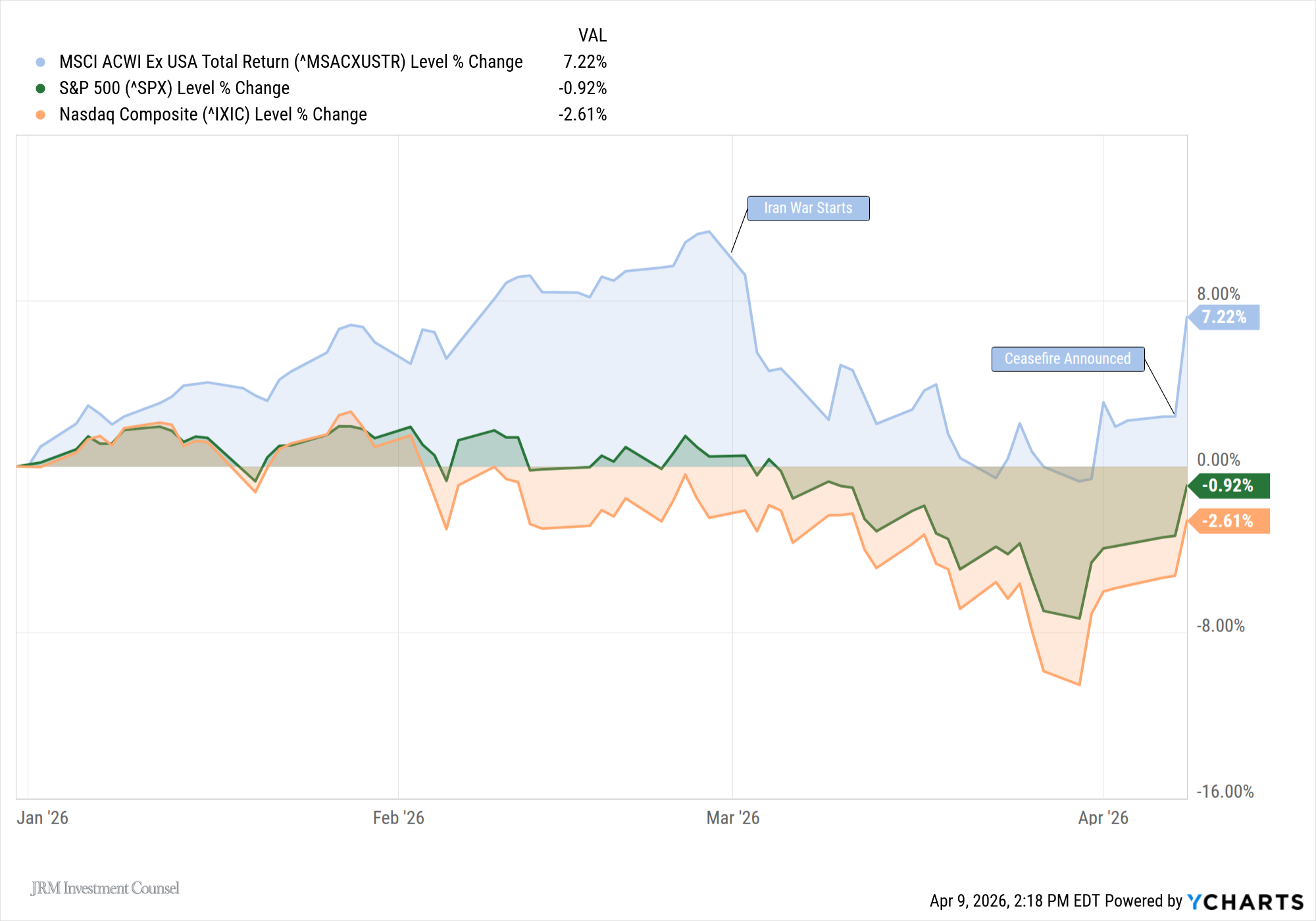
International markets outperformed domestic with developed and emerging market equities producing a 7.3% and 8.7% return, respectively. Globally, real estate was also buoyed by the anticipation of further rate cuts, producing a strong 16.6% total return in the quarter, as defined by the MSCI World/REITs Index.
Fixed income investors also enjoyed gains in the quarter, with the Bloomberg US Aggregate Bond Index returning 5.2%. Further, the yield curve began to normalize. As of quarter end, 2-year/10-year treasury yields dis-inverted and are positively sloped for the first time in over two years, albeit marginally. As of October 7th, this part of the curve is essentially flat, with the 2- and 10- year yielding 3.99% and 4.03%, respectively.
Finally, the election cycle drama continues. Voters have strong opinions about the 2024 election and polls remain close. Until there is more certainty regarding the political landscape, volatility in capital markets should be expected. Historically, election related volatility has been short-lived. As we wrote last quarter, separating political beliefs from investment decisions is important to being a successful investor. The economic context is far more relevant than the political, and capital markets have performed well over the long term regardless of the political party in control.
In uncertain environments, adhering to your financial plan is crucial in avoiding emotionally driven investment decisions. This approach helps you stay focused on your long-term goals and objectives.
We are grateful for your trust and confidence. Please let us know if you have questions, would like to discuss your financial plan or review your investment portfolio.
Respectfully,
The JRM Investment Counsel Team
Jack, Phil and Lauren