The first quarter of 2026 marked a more subdued start to the year, as global markets pulled back following the strong gains of 2025.
For the quarter, the S&P 500 declined 4.3%, developed international markets fell 1.2%, and emerging markets declined 0.2%. Fixed income was relatively stable, with the Bloomberg U.S. Aggregate Bond Index declining 0.05%.
Prior to the escalation in Iran, international equities continued to build on their 2025 momentum, while U.S. equities largely traded within a range of roughly ±2%. That dynamic shifted in March, as markets turned sharply lower amid rising geopolitical tensions, volatile energy prices and renewed inflation concerns. The MSCI ACWI Ex-USA and Nasdaq entered correction territory, declining approximately 11% and 13%, respectively, peak-to-trough.

At the index level, volatility has remained relatively contained. The S&P 500 experienced a peak-to-trough price decline of approximately 9% year-to-date, notably below the long-term average intra-year drawdown of roughly 14%. This stands in contrast to the sharper 19% decline experienced in April 2025, highlighting a market that has been more resilient despite a renewed sense of uncertainty.

While recent declines have been modest relative to historical averages, intra-year drawdowns are a normal part of market cycles, and periods of heightened uncertainty can still result in further downside.
This type of backdrop can feel less intuitive, as index-level stability may mask more significant shifts within portfolios. At the same time, a wider range of outcomes across sectors and companies tends to create a more favorable environment for disciplined, factor-based approaches that emphasize characteristics such as valuation, profitability, and balance sheet strength.
Performance divergence has been especially pronounced at the sector level. Energy was a clear standout, rising 38.2% during the quarter, while materials also posted gains of 9.3%. In contrast, areas of the market more sensitive to economic expectations and interest rates, including financials, technology, and consumer discretionary, declined by more than 9% over the same period.
Even within weaker sectors, a meaningful share of companies outperformed the broader index. Declines have been more concentrated among a narrower group of larger companies, while performance across the rest of the market has been more varied.
This is not a call on any single outcome, but rather a reflection of how a broader set of drivers are influencing returns across markets.
Energy markets have made an impact, with oil prices rising sharply amid disruptions to one of the world’s most critical shipping corridors. Roughly 20% of global oil supply flows through the Strait of Hormuz, making it one of the most consequential chokepoints in the global energy system.
As tensions escalated through late February and into March, the Strait was effectively closed to commercial traffic, driving Brent crude prices as high as $114 per barrel, up from roughly $70 prior to the disruption. The 2022 energy shock remains an instructive comparison, as that surge contributed to a broad increase in inflation and weighed on both consumer sentiment and global growth, though the U.S. is better positioned today given higher domestic energy production.

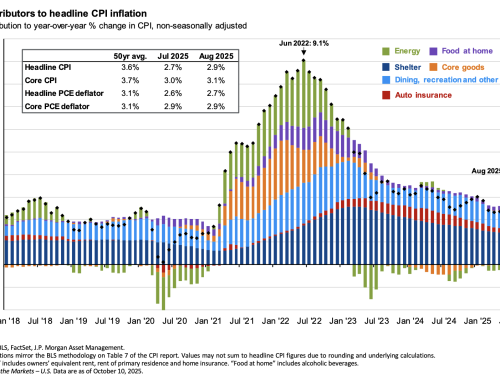
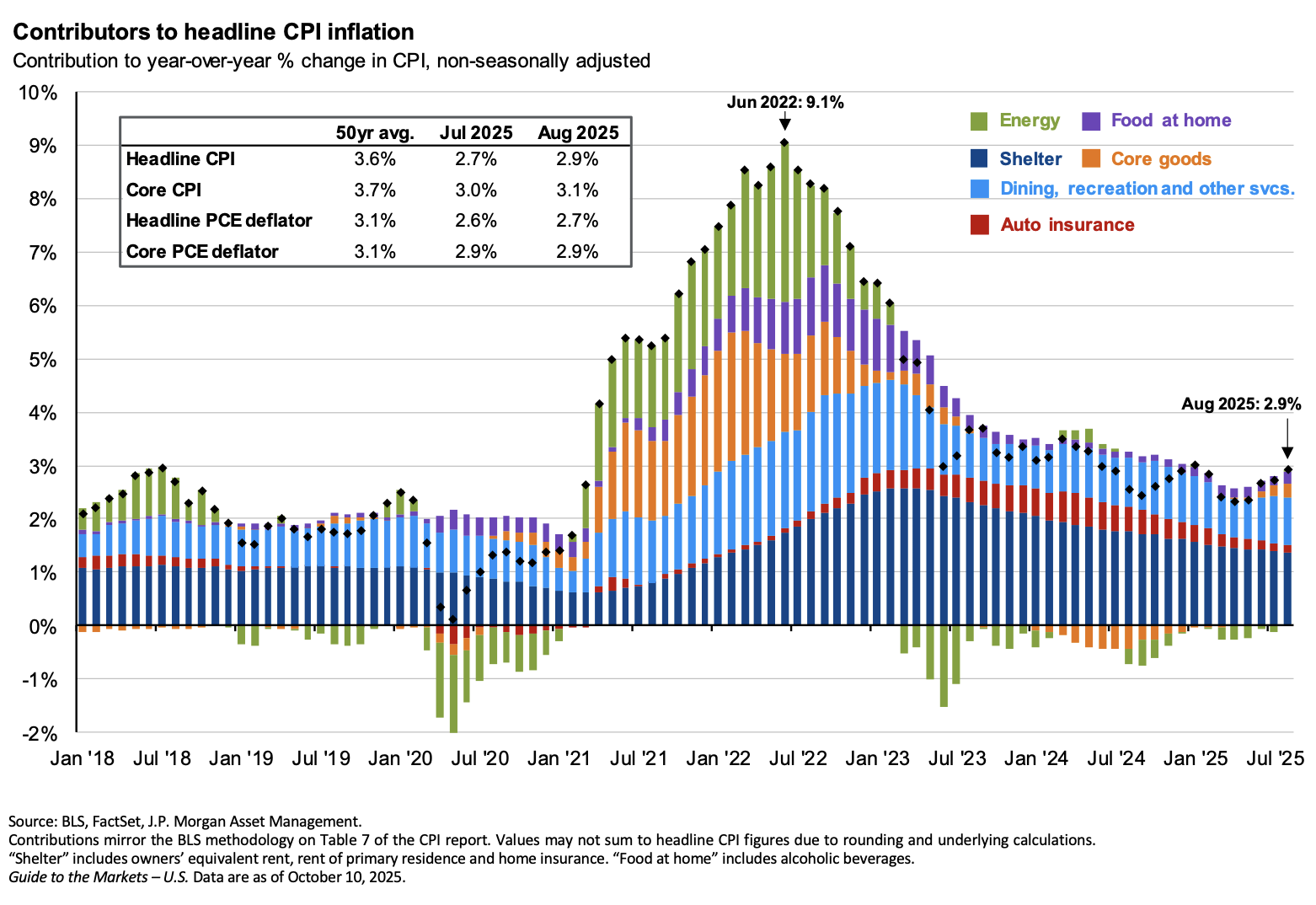
Higher energy prices tend to work their way through the economy over time, increasing transportation and production costs and, ultimately, the price of goods more broadly. Recent data reflects these pressures: Eurozone consumer prices have moved higher to approximately 2.5%, while in the U.S., March CPI rose to 3.3% and the ISM Prices Paid index reached its highest level since 2022.
On April 7, a two-week ceasefire was announced between the U.S. and Iran, including a commitment to reopen the Strait of Hormuz to commercial shipping. Markets responded quickly, with Brent crude declining sharply and U.S. equity futures moving higher.
The durability of the agreement remains uncertain. Disagreements over the scope of the ceasefire, particularly related to ongoing tensions in Lebanon, have introduced additional complexity. Reports of renewed disruptions to tanker traffic and energy infrastructure underscore how sensitive the situation remains.
While oil prices have retraced from their peak, they remain elevated relative to pre-conflict levels. The path forward will depend on whether the ceasefire holds and whether energy flows normalize. A sustained resolution would ease pressure on inflation and growth, while renewed disruption would likely reintroduce those headwinds.
Monetary policy continues to play a central role in shaping market expectations. Excluding energy, inflation has continued to moderate, though progress remains uneven, and labor market conditions have shown signs of softening without meaningful deterioration. This backdrop allows for policy flexibility, but also introduces uncertainty around the timing and magnitude of future rate adjustments.
Energy costs have been a complicating factor for the inflation outlook. A meaningful and sustained decline in energy prices, as suggested by the initial market reaction to the ceasefire, would provide some relief if it proves durable. Whether central banks respond will depend in part on whether those improvements hold.
The U.S. economic backdrop remains relatively resilient. Recent labor market data showed continued job creation, with March payrolls increasing by approximately 178,000 and the unemployment rate declining to 4.3%. Consumer spending has also remained stable, suggesting the economy continues to absorb higher costs, at least for now.
There are signs of gradual cooling beneath the surface. Labor force participation has edged lower to 61.9%, coming in below expectations, while job openings have declined to approximately 6.9 million. Hiring activity has also slowed, now at its lowest level in several years. Taken together, these trends point to a balanced, but gradually moderating, labor market.
By contrast, many economies in Europe and Asia remain more reliant on imported energy, making higher oil prices a more direct drag on their growth and inflation outlooks. Any sustained easing in energy markets would likely benefit these regions disproportionately.
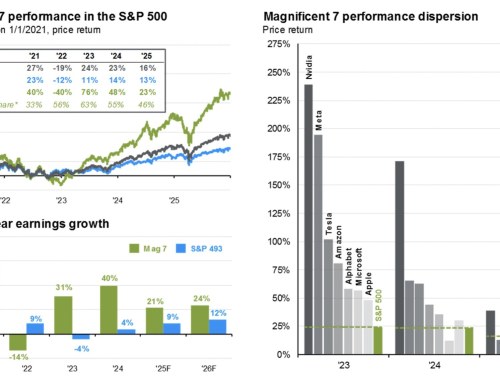
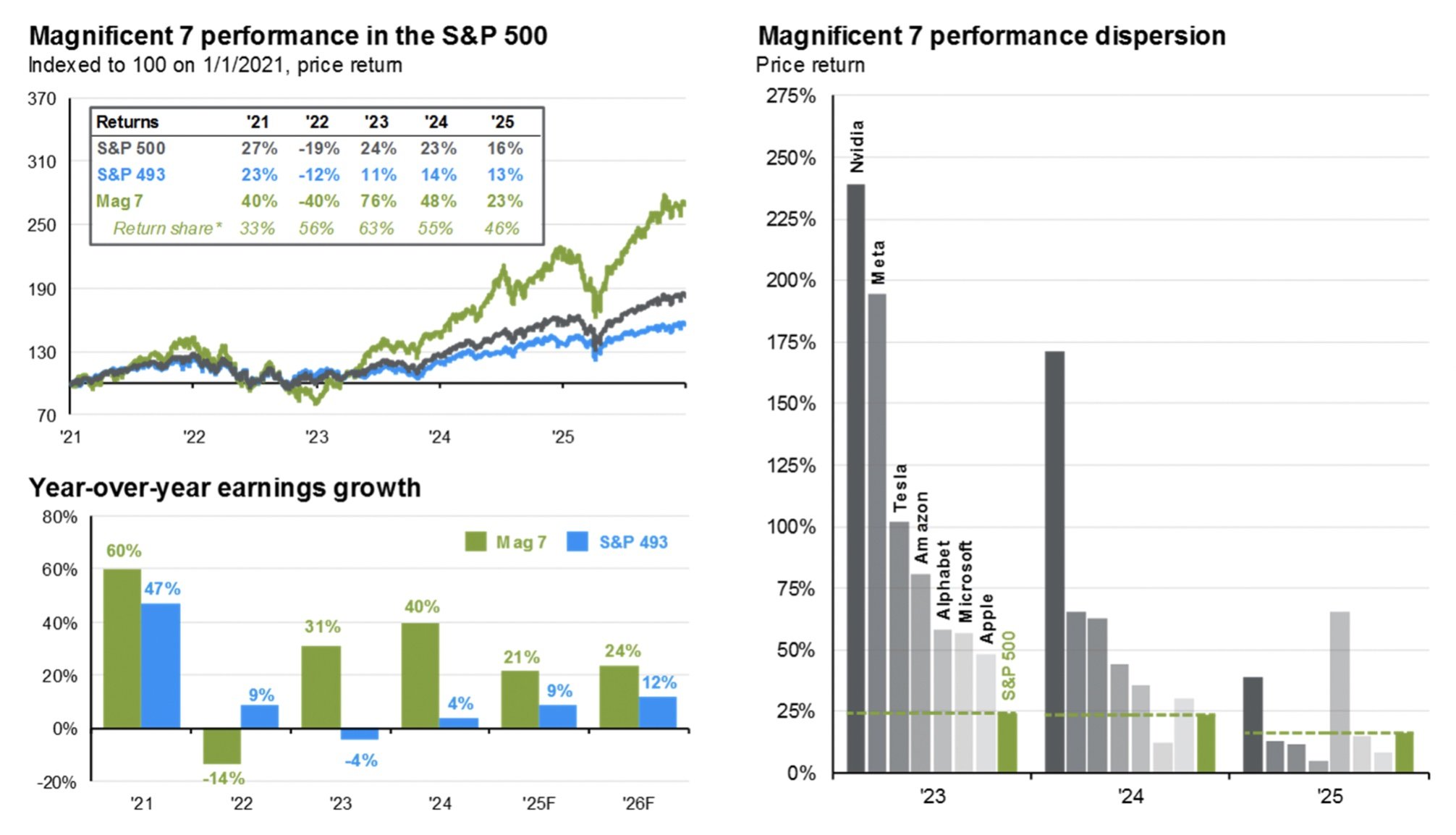
Domestically, the largest U.S. technology companies continue to play an outsized role in the current market environment, though the narrative has begun to shift. After a period where price appreciation significantly outpaced earnings growth, investor focus is shifting toward the tangible returns on the substantial capital deployed over the past several years.
Markets are beginning to differentiate more meaningfully between companies that are directly benefiting from AI-related demand and those where expectations may have moved ahead of realized outcomes. Performance among the largest technology companies has become more varied, with fewer names driving index-level returns and a wider range of outcomes emerging within the group.
This broader shift is also evident in the relative performance of value and growth-oriented stocks. After several years of growth significantly outperforming, that dynamic began to reverse in late 2025 and has continued into 2026. Large-cap value outperformed growth by nearly 12% during the quarter, reflecting a meaningful shift in market leadership driven by higher interest rate sensitivity among growth companies, increased scrutiny of capital-intensive investment themes, and stronger relative performance from sectors tied more closely to current economic activity.

As we move further into 2026, the market appears less defined by broad-based momentum and more by differentiation across sectors, companies, and asset classes. The coming weeks will be closely watched, as the ceasefire represents a potential inflection point for energy markets and the inflation outlook. Its durability, along with ongoing regional tensions, will likely remain a key driver of near-term market performance.
Our approach remains consistent. We continue to trim exposures where valuations appear stretched, selectively add where opportunities are more compelling on a risk-adjusted basis, and maintain diversified exposure across asset classes. Periods of volatility are not reasons to retreat, but opportunities to rebalance and strengthen portfolios.
Our guidance remains straightforward: stay diversified, stay disciplined, and stay focused on the long term. Portfolios grounded in quality and balance are best positioned to navigate uncertainty and benefit from the opportunities that follow.
Please reach out if you would like to review your portfolio or financial plan. We are grateful for your continued trust and confidence.
Respectfully,
The JRM Investment Counsel Team
Jack, Phil and Lauren