The third quarter was marked by an unusual combination of continued economic growth, persistent inflation, rising interest rates, and strength across global equity markets. Consumer spending remained firm, business investment remained strong, and corporate earnings advanced.
Markets were mixed, with the S&P 500 gaining 2.3%, developed international markets returning 0.8%, and preferred stocks rising 0.3%. Emerging markets declined 0.4%, while fixed income fell 3.5%.
Second-quarter real GDP increased at a 2.2% annualized pace, while the Atlanta Fed’s GDPNow model currently estimates third-quarter growth near 3.7%. That estimate is well above consensus and may prove optimistic, but it reinforces the broader point that the economy continues to expand despite elevated interest rates.
Consumer spending rose 0.9% in August, while disposable personal income increased just 0.3% and the personal saving rate fell to 4.1%. Consumers are still spending, but the headline figures mask important differences across households. Lower-income households devote a larger share of income to necessities, making them more exposed to the cumulative rise in the cost of living. Higher-income households generally have more financial flexibility, supported in part by stronger balance sheets and rising asset values.
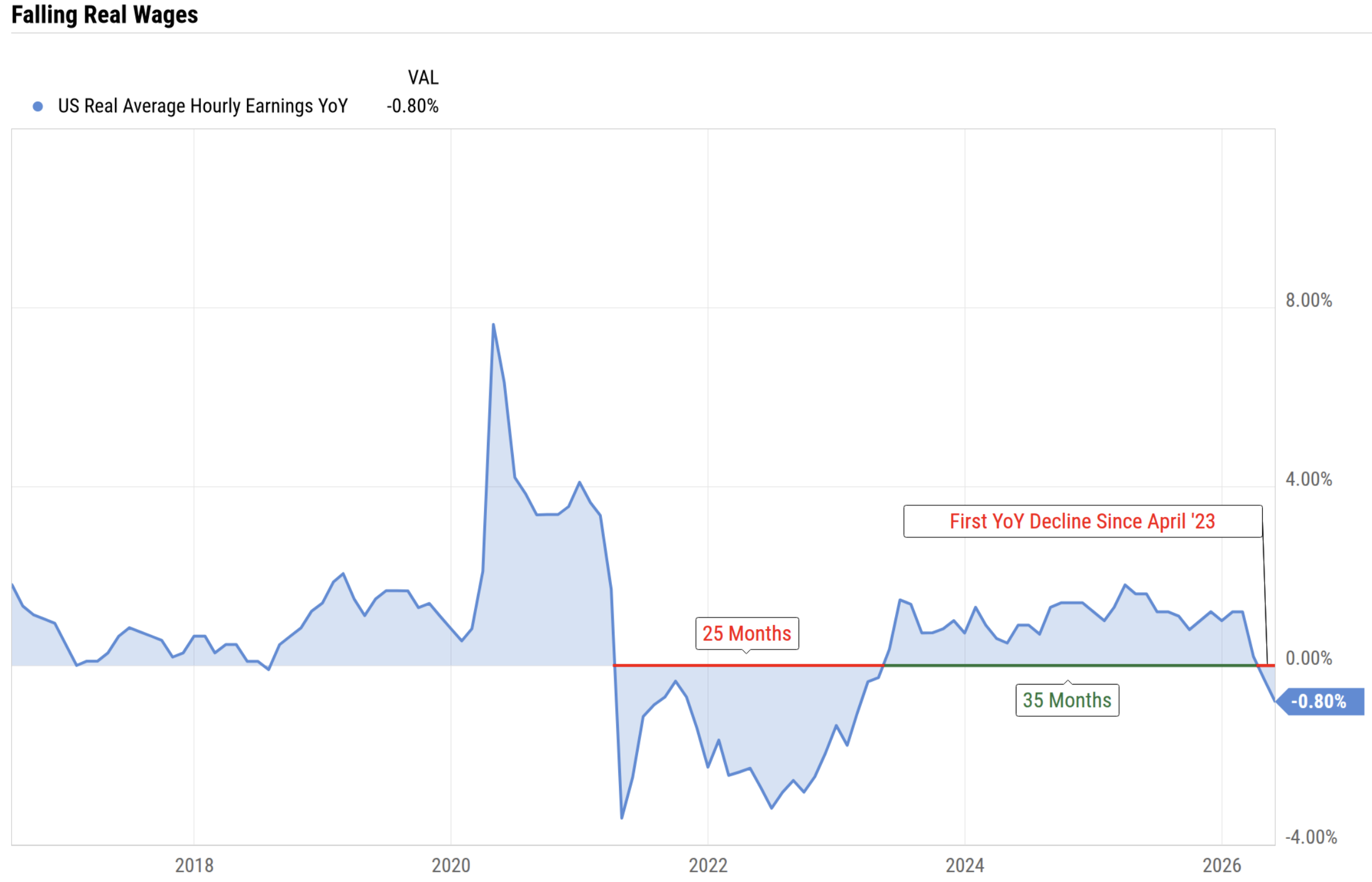
The inflation picture looks different depending on whether we focus on the rate of change or the level of prices. Headline inflation has declined substantially from its 2022 peak, and core inflation has moderated as well. But the Consumer Price Index itself continues to rise. Slower inflation means prices are increasing at a slower pace; it does not mean the cumulative increase in the cost of living has reversed.

Inflation continues to impact monetary policy. In September, the Federal Reserve raised its target range for the federal funds rate by 0.25% to 3.75%–4.00%. The Committee characterized economic activity as expanding at a solid pace, supported by resilient domestic spending and robust capital investment, while acknowledging that inflation continues to run above its objective.
The more interesting development for investors may be occurring farther out on the yield curve.
Treasury yields rose significantly during the quarter, with the 2-year and 10-year ending September at 4.9% and 5.3%, respectively. At the end of June, those yields stood at 4.1% and 4.4%, compared with 3.5% and 4.2% at the beginning of the year. Yields across every maturity of the curve have shifted sharply higher.

Short-term rates are heavily influenced by Federal Reserve policy. Longer-term yields reflect a broader combination of expectations for inflation, economic growth, fiscal conditions, and the additional return investors require to commit capital for longer periods.
For investors, a 10-year Treasury yielding more than 5% changes the relative attractiveness of nearly every other asset class. Higher yields create challenges for borrowers and can pressure long-duration assets. They also restore an important source of portfolio income and raise the hurdle for equities.
As the chart below illustrates, earnings growth has been widespread across global equity markets and has been the primary driver of returns this year. Across most regions, stronger earnings outweighed multiple compression and supported positive total returns.

This represents a notable change from 2025, when rising valuation multiples contributed substantially to returns across most major markets. When multiples expand, it means investors are willing to pay more for each dollar of expected future earnings. In 2026, that relationship has largely reversed. Earnings have continued to grow while multiples have generally contracted.
Corporate profits ultimately need to support higher stock prices for the longterm. We view returns driven more by earnings growth than by multiple expansion as a healthier foundation.
Earnings strength has not been confined to the United States. Through quarter-end, U.S. equities have generated a 12.8% total return, non-U.S. equities 14.7%, and emerging markets 23.4%, with earnings contributing substantially across each market.
The opportunity set looks different when we consider the price investors are paying for those earnings. Valuations remain widely dispersed across global markets, with the S&P 500 trading at 19.0 times forward earnings, compared with 12.6 times for broad non-U.S. equities and 9.7 times for emerging markets.
The valuation gap between the United States and international markets is not new. Some premium for U.S. equities is reasonable. American companies have historically generated strong profitability, the market has greater exposure to high-growth industries, and earnings have often been more consistent.
Despite outperforming U.S. equities for over two years, broad non-U.S. equities still trade at an approximate 32% discount to the domestic market, compared with an average discount of 20% over the past two decades.

The sector comparison on the right side of the chart adds context. International equities trade at discounts to comparable U.S. sectors across much of the market, including technology, consumer discretionary, industrials, financials, energy, and materials. The valuation gap therefore cannot be explained entirely by differences in the sector composition of the respective indexes.
Lower valuations alone are not a reason to own an investment, nor do they guarantee higher future returns. Different markets deserve different valuations based on their growth prospects, profitability, industry composition, and underlying risks. But the price paid for future earnings remains a key component of long-term return potential.
International markets do not need their valuation discount to fully close in order to produce attractive results. If earnings continue to grow from lower starting valuations, investors can benefit from improving fundamentals without relying as heavily on multiple expansion.
Taken together, the two charts highlight a defining feature of today’s market. Earnings growth has been broad-based globally, but investors are paying very different prices for that growth depending on where they invest.
This dispersion reinforces the value of maintaining diversified exposure across global equity markets.
The combination of relative global equity valuations and higher fixed-income yields creates a broader opportunity set than we have seen in many years. A diversified portfolio’s purpose is to draw from multiple sources of return rather than relying on a single sector, country, or investment theme to support long-term financial goals and objectives.
We continue to believe in the core investing principles of discipline and diversification, with a long-term focus on owning quality investments at sensible valuations. Strong companies can also be poor investments at the wrong price, just as periods of uncertainty can create opportunities in areas of the market that have been out of favor.
Please reach out if you would like to review your portfolio or financial plan. We are grateful for your continued trust and confidence.
Respectfully,
The JRM Investment Counsel Team
Jack, Phil and Lauren